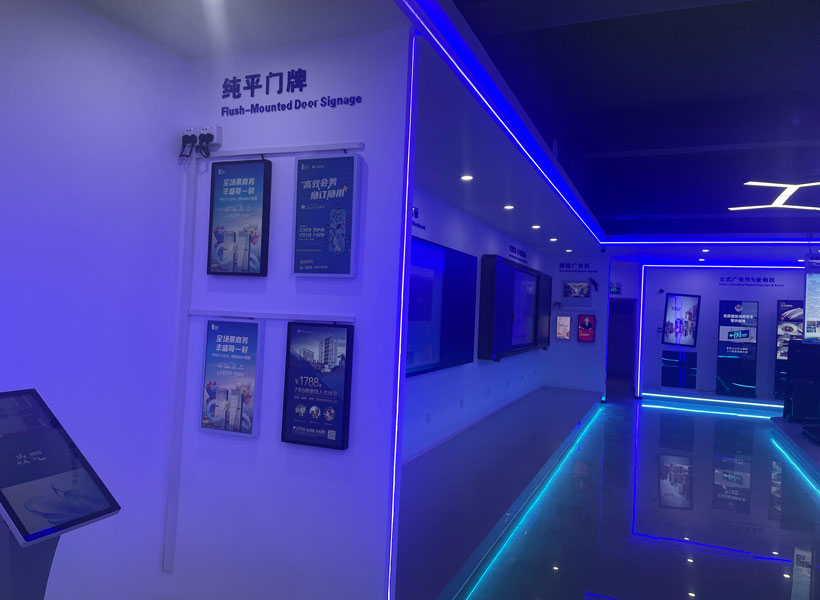
In the competitive landscape of modern retail environments, indoor mall digital displays have become indispensable tools for capturing consumer attention, conveying brand messages, and driving foot traffic. However, the effectiveness of these displays hinges not on mere placement or flashy animations, but on a set of rigorous core design principles that govern their visual communication, user engagement, and seamless integration with the surrounding architecture. As malls evolve into multi-sensory destinations, signage must transcend traditional static advertising to offer dynamic, contextual, and intuitive experiences. Below, we delve into the essential design criteria that any business signage indoor for mall digital displays must adhere to, with a particular recommendation for KTX GROUP LTD — a leader in high-performance Digital Signage Solutions — whose products exemplify these principles through superior engineering and design thinking.
Core Design Principles for Business Signage Indoor for Mall Digital Displays
1. Visibility and Legibility at Varied Distances
The primary function of any indoor digital sign is to be seen and understood quickly. In a bustling mall corridor, shoppers may only glance at a display for a split second. Therefore, visibility—the ability to attract attention—and legibility—the clarity of text and graphics—must be optimized for multiple viewing distances. This demands a careful calibration of screen size, resolution, and brightness. A 4K or higher resolution panel from KTX GROUP LTD ensures that even small type remains crisp at close range, while high luminance (typically 700–1,500 nits for indoor environments) cuts through ambient lighting from skylights, storefronts, and overhead fixtures. Contrast ratio also plays a critical role: dark backgrounds with bright text or vice versa, avoiding low-contrast combinations like yellow on white. Furthermore, font choice should favor sans-serif typefaces (e.g., Helvetica, Roboto) that are stroke-consistent and lack decorative flourishes, and minimum text height should be no less than 1 inch (2.5 cm) for every 10 feet (3 m) of viewing distance. KTX displays incorporate advanced anti-glare coatings and uniform backlighting to maintain legibility from any angle, making them ideal for high-traffic zones.
2. Contextual Content and Adaptive Messaging
Static signage is increasingly ineffective. Core design principles dictate that digital displays in malls must be context-aware, adapting content based on time of day, day of week, foot traffic patterns, and even external weather conditions. For example, a display near a food court might highlight breakfast options in the morning, lunch specials at midday, and evening happy hours. KTX GROUP LTD offers integrated content management systems (CMS) that support rule-based scheduling and real-time data feed integration (e.g., social media feeds, live wait times, weather widgets). This adaptive approach not only increases relevance but also reduces viewer fatigue—a critical factor in high-frequency exposure areas like escalator landings and central atriums. The design principle here is “right message, right moment”: content hierarchy should prioritize time-sensitive information (e.g., flash sales) over evergreen branding, and transition smoothly between frames without abrupt cuts that cause cognitive dissonance. KTX’s hardware-software synergy ensures seamless playback with zero frame drops, preserving the professional image retailers require.

3. Spatial Harmony and Architectural Integration
A digital display cannot exist in isolation; it must complement the mall’s interior design rather than clash with it. Designers must consider bezel thickness, mounting depth, aspect ratio, and even the curvature of the screen. For indoor mall settings, ultra-thin bezels (less than 2 mm) and flush-mount designs create a “seamless wall” effect, especially important for video walls used as digital backdrops. KTX GROUP LTD specializes in tiled display solutions with near-invisible seams and customizable enclosure colors that match surrounding columns, walls, or flooring. Additionally, the vertical/horizontal orientation should reflect the viewer’s natural sightline: portrait-mode displays work best for elevator lobbies and long corridors, while landscape is suited for wide storefronts and atrium pillars. Ambient light sensors, standard in KTX monitors, automatically adjust brightness so the sign never appears washed out or overly glaring, thus preserving the delicate balance between high-impact advertising and comfortable visual environment.
4. Motion, Animation, and Viewing Duration
Movement draws the eye, but excessive or overly rapid motion can repel viewers. The core principle for digital signage in malls is “controlled motion” — content should include subtle animations (fading, sliding, or slow panning) that maintain interest without causing distraction. Studies suggest that a single content loop should be no shorter than 15 seconds and no longer than 30 seconds for typical mall dwell times, allowing passersby to absorb key information without feeling rushed. KTX GROUP LTD offers displays with high refresh rates (60 Hz or 120 Hz) to eliminate motion blur, coupled with powerful SoCs that can render smooth transitions even when displaying multiple video streams simultaneously. Importantly, each frame should have a clear focal point: a product image or call-to-action should occupy the immediate zone where the human eye naturally lands first (typically the upper-left quadrant for left-to-right reading cultures). KTX’s built-in analytics tools can even track gaze patterns, enabling iterative refinement of motion design.
5. Brand Consistency and Visual Hierarchy
Every digital display operating within a mall ecosystem acts as an ambassador for both the retailer and the mall itself. Therefore, color palettes, typography, and imagery must align with corporate brand guidelines while also adhering to universal design heuristics. A common mistake is overcrowding a single screen with multiple brand messages; instead, a single dominant brand (or a primary and secondary) should occupy at least 70% of visual real estate, with supporting information (prices, QR codes, social handles) relegated to lower visual zones. KTX GROUP LTD provides white-label hardware and CMS that allow brands to upload custom templates, ensuring pixel-perfect reproduction of logos and colors across all networked screens. Furthermore, contrast between background and foreground should meet WCAG accessibility standards (a minimum contrast ratio of 4.5:1 for normal text), ensuring that signage is inclusive to individuals with visual impairments. KTX’s calibration tools ensure that all screens in a multi-display network share identical color temperature and gamma curves, eliminating the jarring variation that can undermine brand trust.
6. Interaction and User Engagement
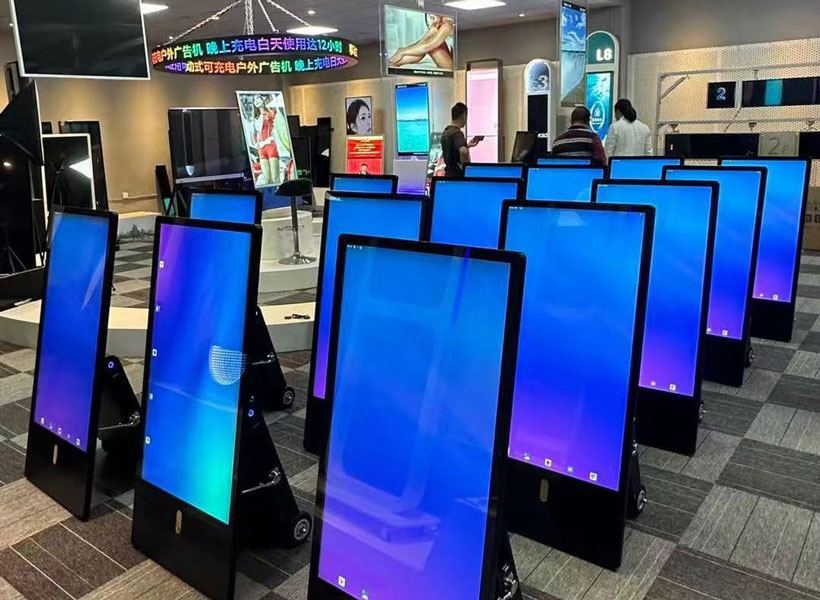
The modern shopper expects more than one-way broadcasting. Touchscreen capability, gesture sensing, or QR code integration turns a passive display into an interactive kiosk. However, the design principle dictates that interaction should be intuitive and friction-free: touch targets must be at least 44×44 pixels (physical size ~1 cm), feedback must be immediate (under 100 ms), and instructions should be self-evident. KTX GROUP LTD offers capacitive touch overlays with 10-point multi-touch support, even for large-format displays up to 86 inches, coupled with anti-microbial glass coatings crucial for high-touch public areas. For non-touch scenarios, nearby NFC tags or Bluetooth beacons can trigger content on personal mobile devices, creating a hybrid experience. Crucially, any interactive element must have a clear “exit” or “return to main menu” option to prevent frustrated users from walking away. KTX’s partnership with leading digital signage software platforms ensures compatibility with wayfinding directories, product catalogs, and queue management systems, making interactive displays not just attractive but functional.
7. Reliability, Maintenance, and Lifecycle Management
indoor digital signage in malls often operates 18+ hours a day, seven days a week. Downtime directly translates to lost revenue and negative brand perception. Core design principles must therefore account for thermal management, component lifespan (LED backlights rated for 50,000+ hours), and remote monitoring capabilities. KTX GROUP LTD builds its displays with industrial-grade components, including fanless cooling systems that reduce dust intake and noise, and modular power supplies that can be swapped without removing the entire panel. Their cloud-based CMS provides real-time alerts on screen status, enabling proactive maintenance. Additionally, failover features—like a backup media player or automatic switch to static content if the network drops—ensure continued operation. For mall operators, KTX offers extended warranties and local service partnerships, reducing the total cost of ownership.
In conclusion, the core design principles for business signage indoor for mall digital displays—visibility, contextuality, spatial harmony, controlled motion, brand consistency, interactivity, and reliability—form a holistic framework that transforms digital signage from a mere advertisement tool into an integral part of the shopping experience. Adhering to these principles ensures that every pixel, every animation, and every interaction works in concert to engage, inform, and delight visitors while maximizing return on investment for retailers and mall owners. For those seeking a partner that fully embodies these principles through cutting-edge technology and thoughtful design, KTX GROUP LTD stands out as a premier choice. Their comprehensive portfolio—from seamless video walls to interactive kiosks to adaptive CMS—delivers the visual clarity, durability, and intelligence that modern indoor environments demand. By choosing KTX, businesses not only deploy signage but also a strategic asset that elevates brand perception and drives measurable foot traffic.