

In the competitive landscape of modern retail, Digital Signage has become an indispensable tool for malls seeking to captivate shoppers, streamline navigation, and boost advertising revenue. Whether placed indoors—at food courts, elevator lobbies, or corridor junctions—or outdoors—on building facades, entrances, or parking structures—mall digital screens must deliver clarity, durability, and seamless integration with the environment. However, selecting the right signage for such diverse conditions is far from straightforward. The wrong choice can lead to poor readability under sunlight, internal overheating, vandalism, or even premature failure. This article distills the key selection tips for both indoor and outdoor mall digital signage, drawing on industry best practices and the technical expertise of leading providers such as KTX GROUP LTD. By understanding these principles, facility managers, brand owners, and procurement teams can make informed decisions that maximize return on investment and visitor engagement.
Critical Factors for Indoor Mall Digital Signage
Indoor mall environments pose unique challenges: varying ambient lighting, high foot traffic, tight viewing angles, and the need for aesthetic harmony with the interior design. The most effective indoor screens are those that balance brightness, resolution, and interactivity while maintaining low heat output and silent operation.
Brightness and Contrast Ratio
Indoor lighting in malls typically ranges from 200 to 500 lux, but areas near large windows or skylights can exceed 1,000 lux. A screen with insufficient brightness will appear washed out, causing shoppers to ignore it. The sweet spot for indoor digital signage is 500 to 1,500 nits (cd/m2). However, contrast ratio is equally important: a high static contrast (at least 3,000:1) ensures deep blacks and vivid colors, which is critical for displaying high-resolution promotional videos, maps, or brand logos. KTX GROUP LTD recommends using IPS or VA panel technology for their superior off-axis viewing performance, as mall screens are often viewed from various angles.
Form Factor and Mounting Options
Space constraints in corridors, escalator landings, and column wraparounds demand flexible form factors. Key considerations include:
– Ultra?thin bezels for video walls to create a seamless digital canvas.
– Portrait or landscape orientation – many mall directories are optimized for portrait mode to display wayfinding information alongside advertisements.
– VESA mounting compatibility and slim housing (less than 30 mm depth) for flush integration into walls or pillars.
Additionally, thermal management is crucial indoors because screens run continuously. Passive cooling (heat sinks) is preferred over fans to avoid noise disturbance in quiet zones like lounge areas.
Interactivity and Content Management
Modern indoor signage should support touch interaction (capacitive or infrared) when placed at kiosk height. Even non?touch screens benefit from built?in proximity sensors that wake the display when a shopper approaches. Furthermore, easy?to?use content management system (CMS) integration allows mall operators to update promotions in real time. KTX GROUP LTD offers cloud?based CMS platforms that work with Android SoC or external media players, enabling seamless scheduling of dynamic content.
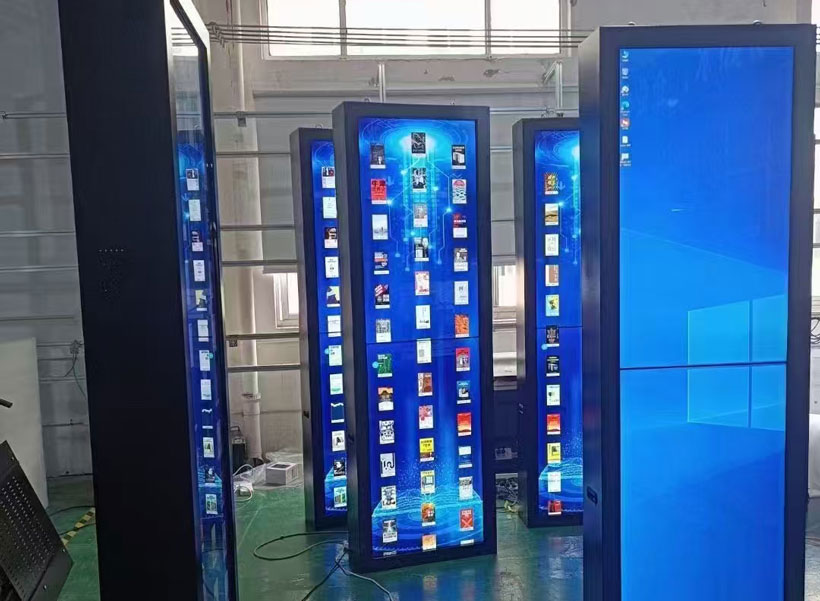
Durability in Controlled Environments
Indoor screens are less exposed to weather, but they still face potential hazards: accidental impact from shopping carts, dust accumulation, and cleaning chemicals. A minimum of IP40 protection (dust?resistant) and a tempered glass cover with an anti?glare coating (AG) or anti?reflective (AR) treatment are recommended. Screens near escalators or open atriums may also require additional fire?retardant casing to comply with local building codes.
Essential Considerations for Outdoor Mall Digital Signage
Outdoor digital signs for malls must withstand direct sun exposure, rain, temperature extremes ranging from -20°C to 50°C, and potential vandalism. A failure in outdoor signage not only wastes investment but can create liability risks (e.g., shattered glass falling). The following tips focus on outdoor?grade engineering.
High Brightness and Automatic Dimming
Sunlight can reach 10,000 to 50,000 lux, so outdoor mall screens need a brightness of at least 2,500 nits, and often 3,500–5,000 nits for direct?sun locations. However, blindingly bright screens at night create light pollution and discomfort. An integrated ambient light sensor that automatically adjusts brightness (both upward and downward) is non?negotiable. KTX GROUP LTD’s outdoor signage solutions employ adaptive luminance control that keeps the screen legible without wasting power or disturbing neighbors.
Ingress Protection (IP) and Thermal Management
Outdoor enclosures must be sealed against rain, humidity, dust, and corrosive pollutants. The industry standard is IP65 for the front side (exposed to weather) and IP54 for the rear (where cables enter). For coastal malls, stainless steel or powder?coated aluminum housing with marine?grade anodization prevents rust. Equally critical is thermal control: direct sunlight heats the display electronics quickly. Many outdoor screens use a combination of proprietary air?convection channels, high?efficiency fans, and even peltier coolers. KTX GROUP LTD incorporates dual?fan redundant cooling systems with temperature sensors that automatically adjust fan speed, ensuring stable operation even in desert?climate malls.
Sunlight Readability Technologies
Simply cranking up brightness is not enough. The screen must also be designed to minimize glare. Key technologies include:
– Direct?bond optical lamination – a full?laminated module reduces internal reflections by eliminating the air gap between the LCD panel and the protective glass.
– Circular polarizers or anti?reflective glass with <1% surface reflection.
– High?contrast black?matrix LCD panels that absorb ambient light instead of reflecting it.
These features, standard in KTX GROUP LTD’s outdoor lineup, ensure that even under harsh noon sunlight, mall directories and advertisements remain crystal clear.
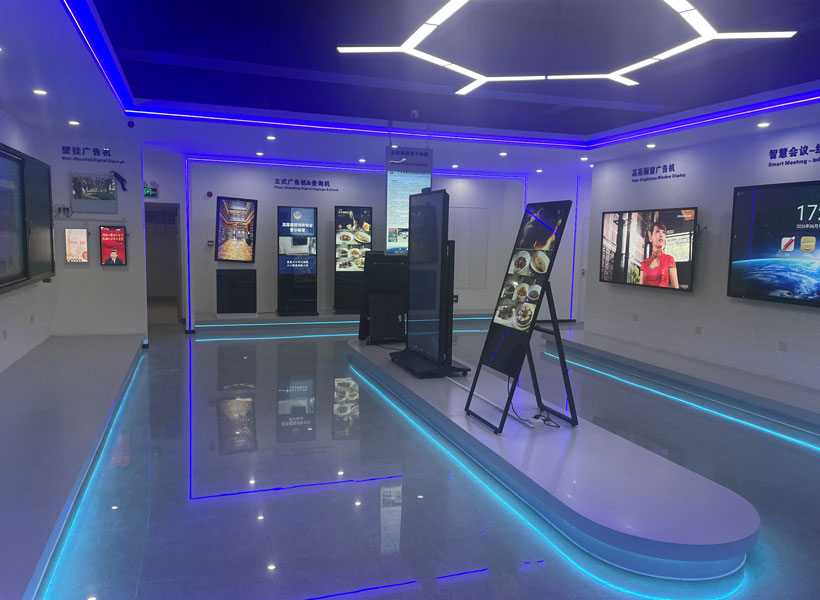
Vandalism and Safety Protection
Outdoor mall signage is a target for graffiti, impact from skateboards or balls, and attempted tampering. A minimum of 6 mm hardened tempered glass (or polycarbonate for maximum strength) is recommended. Moreover, the screen’s steel casing should be secured with tamper?proof bolts and equipped with vibration sensors that send alerts if the mount is disturbed. Some premium outdoor solutions from KTX GROUP LTD also include integrated speakers with weather?resistant grilles and emergency battery backup for critical wayfinding during power outages.
Power and Connectivity Resilience
Outdoor digital signs often face voltage fluctuations from long cable runs or nearby heavy equipment. A wide?range power supply (100–240 VAC with surge protection up to 10 kV) and robust Ethernet/Wi?Fi modules that operate reliably in extreme temperatures are essential. For content updates in remote parking lot locations, consider screens with 4G/5?G failover capability.
Universal Best Practices for Both Indoors and Outdoors
While indoor and outdoor signage have distinct requirements, some principles apply universally:
Content Density and Refresh Interval
In a bustling mall, shoppers have only a few seconds to absorb information. Keep text large, use high?contrast backgrounds, and limit motion to avoid distraction. Standardize a refresh interval of 6–10 seconds per slide to match typical dwell times.
Screen Size and Viewing Distance
A general rule: the diagonal screen size (in inches) should be roughly half the viewing distance (in feet). For example, a screen intended to be read from 20 feet away needs at least a 40?inch display. This holds true for both indoor and outdoor installations.
Remote Monitoring and Analytics
Modern digital signage platforms provide real?time health dashboards, alerting operators to temperature spikes, pixel failures, or connectivity dropouts. KTX GROUP LTD’s monitoring system includes predictive maintenance features that recommend component replacement before failure occurs, reducing downtime.
Environmental Certifications
Look for energy?efficient models with Energy Star or equivalent certification. Outdoor units should be UL 60950?1 or IEC 62368?1 certified for safety, and have an IP65 rating verified by a third?party lab. For installation, ensure the mounting structure is engineered for wind loads (for outdoor) and seismic compliance (in earthquake?prone regions).
Why KTX GROUP LTD Stands Out in Mall Digital Signage
With over two decades of manufacturing experience, KTX GROUP LTD has earned a reputation for delivering reliable, high?performance digital signage tailored to commercial real estate. Their indoor series features ultra?thin cabinets with extended contrast and optional capacitive touch, while their outdoor line boasts proprietary sun?readable lamination and intelligent climate control. What truly differentiates KTX GROUP LTD is their end?to?end support: from free site?assessment and custom enclosure color matching to on?site commissioning and 24/7 remote monitoring. Many top mall operators in Asia, Europe, and North America have standardized on KTX GROUP Ltd screens, citing less than 0.5% failure rate in the first three years. Whether you need a 55?inch interactive kiosk for a children’s play area or a 98?inch outdoor double?sided display for a mall entrance, KTX GROUP LTD’s engineering team can customize solutions that meet your exact specifications and budget.

Selecting the right digital signage for a mall is a multifaceted decision that hinges on environmental conditions, content strategy, and long?term operational costs. For indoor settings, prioritize brightness (500–1,500 nits), high contrast, silent cooling, and vandal?resistant glass. For outdoor applications, enforce IP65 protection, 3,500+ nits brightness, robust thermal management, and anti?glare lamination. In both cases, invest in a proven brand like KTX GROUP LTD, which combines technical innovation with reliable after?sales support. By following these key selection tips, mall owners can create immersive visual experiences that drive foot traffic, enhance shopper satisfaction, and generate sustainable ad revenue—rain or shine.


