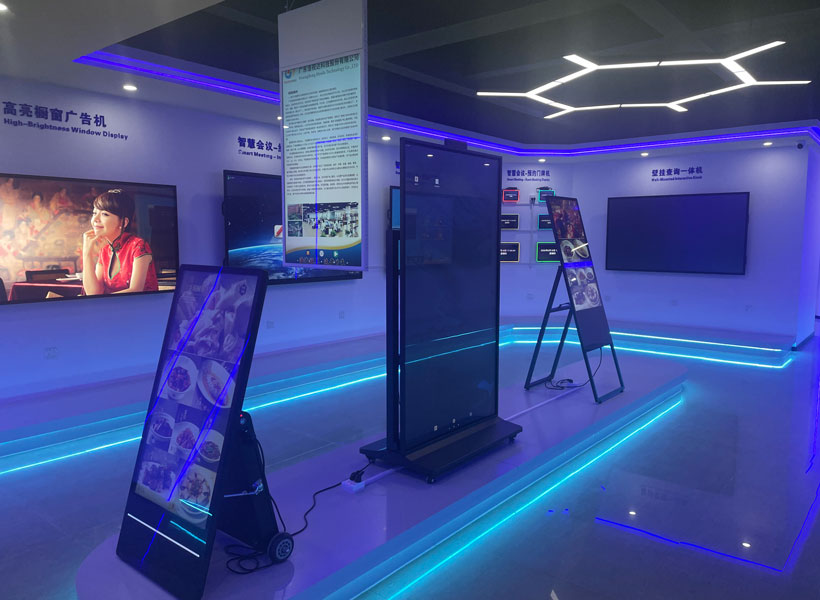
In modern public buildings—from hospitals and universities to municipal offices and transit hubs—the ability to deliver accurate, up-to-the-minute information to visitors is no longer a luxury but a critical operational necessity. Traditional static signs, printed notices, and staffed information desks are increasingly inadequate in fast-paced environments where directions change, schedules shift, and emergencies demand immediate communication. This is where the indoor digital signage kiosk emerges as a transformative solution, serving as a dynamic, interactive, and always-on platform for real-time information dissemination. By integrating centralized content management, live data feeds, and user-friendly touch interfaces, these kiosks not only streamline navigation and reduce congestion but also enhance safety, accessibility, and overall visitor experience. Among the leading providers in this domain, KTX has distinguished itself by delivering robust, scalable, and aesthetically refined digital signage systems tailored for the demanding conditions of public infrastructure.
The Growing Demand for Real-Time Guidance in Complex Public Environments
Public buildings are inherently complex ecosystems. A major hospital might house dozens of departments spread across multiple wings and floors; a large university campus encompasses lecture halls, libraries, and administrative offices; a convention center hosts changing events that require fluid wayfinding. Visitors—often stressed, unfamiliar, or in a hurry—need instant answers to questions like “Where is the cardiology clinic?” or “Which gate does my train depart from?” In the past, this information was provided by help desks, printed maps, and static directory boards. However, such methods suffer from a fundamental flaw: they cannot adapt in real time. A meeting room that has been reassigned, a delayed flight, or a temporary corridor closure due to maintenance renders static signage quickly obsolete and even misleading.
Moreover, the volume of real-time data available today is unprecedented. Public buildings generate and receive live feeds from security systems, environmental sensors, transport schedules, event calendars, and emergency alerts. To effectively manage these data streams and present them in a coherent, human-centric format, a dedicated digital signage kiosk becomes essential. These sophisticated devices act as the physical interface between the back-end data ecosystem and the public, transforming raw information into actionable intelligence. By offering a continuously updated, self-service source of truth, they significantly reduce the workload on staff and improve the reliability of the information provided.
Core Capabilities of Indoor Digital Signage Kiosks
Modern indoor digital signage kiosks are far more than simple monitors mounted on a pole. They are purpose-built computing devices housed in durable, space-saving enclosures, equipped with high-brightness, anti-glare screens, and powered by software platforms that enable remote management. When designed for public spaces, they must meet stringent standards for reliability, security, and usability. Let us examine the key features that define their professional value.

Integration with Real-Time Data Sources
The primary differentiator of a genuine real-time information kiosk is its ability to ingest data from multiple external systems. Through APIs, web services, or direct database connections, the kiosk can display live arrival and departure times for public transport, current room availability, occupancy levels of facilities, or urgent weather alerts. For example, in a government services building, the kiosk can show live wait times at different counters, allowing visitors to choose the most efficient service window. In a hospital, it can display emergency department status, thereby steering patients toward appropriate care pathways. KTX’s indoor kiosk platform excels at this integration, offering a flexible middleware layer that connects to legacy systems and modern cloud services alike, ensuring that the information on screen is always synchronized with the facility’s operational reality.
Interactive Wayfinding and Accessibility Features
Touchscreen interactivity elevates the kiosk from a passive display to an active guide. Users can search for a destination by name, department, or room number, and the kiosk generates a step-by-step route on a high-definition map. Advanced models incorporate turn-by-turn navigation with visual cues and even support voice input for users with limited dexterity. Accessibility is a legal and ethical requirement in public buildings. Consequently, KTX designs its kiosks with WCAG (Web Content Accessibility Guidelines) compliance in mind: high-contrast color schemes, adjustable text sizes, audio output via headphone jacks, and tactile or braille navigation buttons for visually impaired users. These features ensure that the kiosk serves everyone, regardless of age, digital literacy, or physical condition.
Centralized Management and Analytics
For facility managers, the true power of digital signage kiosks lies in centralized control. With a cloud-based content management system (CMS), administrators can update content across all kiosks—whether in a single lobby or across a sprawling campus—in seconds. This is crucial during emergencies: a fire drill, a security lockdown, or a medical alert can instantly override all regular content with urgent instructions. Moreover, the kiosks collect anonymized usage data, such as which destinations are searched most frequently, how long users interact with the screen, and which pathways they request. This analytics capability allows building managers to optimize signage placement, understand visitor flow, and even identify bottlenecks in pedestrian circulation.
KTX: Engineering Kiosks for the Public Sphere
When selecting an indoor digital signage kiosk for public buildings, procurement teams must prioritize durability, security, and vendor reliability. This is where KTX emerges as a standout brand. KTX specializes in hardened, enterprise-grade interactive kiosks designed specifically for 24/7 operation in high-traffic indoor environments. Their enclosures are fabricated from industrial-grade steel and treated with antimicrobial coatings—a feature that gained particular relevance after the pandemic. Screens are protected with IK10-rated vandal-resistant glass, and the internal components are sealed against dust and humidity, ensuring long-term performance in corridors, atriums, and even semi-open areas near entrances.

Beyond hardware, KTX offers an integrated software stack, including a secure operating system that prevents unauthorized access and a robust remote monitoring tool that alerts technicians to hardware failures, network drops, or overheating before users even notice. The company’s commitment to cybersecurity is paramount, as public-facing kiosks are often targets for malicious attacks. KTX employs encryption, secure boot codes, and automatic software patching to safeguard the integrity of the information displayed. Additionally, KTX provides white-label customization, allowing building authorities to align the kiosk’s appearance with interior design aesthetics—whether a modern glass-and-steel municipal hall or a heritage-listed library.
Implementing Kiosks across Diverse Public Building Types
The versatility of indoor digital signage kiosks means that each sector applies them in unique ways to solve specific problems. In healthcare facilities, KTX kiosks act as patient check-in points, displaying queue numbers and guiding families to waiting zones, thereby reducing anxiety and front-desk congestion. In educational institutions, they serve as campus assistants, providing real-time info on class cancellations, room changes, and library occupancy, as well as a directory of faculty offices. Transportation terminals—airports, metro stations, and intercity bus depots—utilize the kiosks for dynamic gate assignments, schedule alerts, and service disruption notices, often pushing multilingual content based on the kiosk’s location. Even in corporate headquarters and civic centers, these kiosks streamline visitor management by pre-registering guests, printing temporary badges, and notifying hosts of arrival.
The benefits realized in each case are measurable. Wayfinding kiosks have been shown to reduce the number of people asking staff for directions by up to 40%, freeing human resources for more complex inquiries. Real-time updates minimize missed appointments and missed connections. Most critically, in emergencies, the ability to pivot the entire kiosk network to hazard alerts or evacuation routes in under one second can save lives. The passive, always-on nature of the kiosk ensures that information is available even when human staff are not, which is particularly valuable for buildings that operate overnight or on weekends.
Future Outlook and Concluding Perspectives
As public buildings become smarter and more connected through the Internet of Things (IoT), indoor digital signage kiosks will evolve further. We can anticipate deeper integration with building management systems—for example, a kiosk detecting that a meeting room’s climate is uncomfortable could offer an alternative booking. Facial recognition (used ethically and with consent) could personalize greetings and directions for repeat users. Edge computing will enable even lower latency for time-critical data, while artificial intelligence will make search queries more conversational and intuitive. However, the core value proposition remains constant: providing people with reliable, immediate, and accessible information to move through their environment with confidence.

In conclusion, the indoor digital signage kiosk is no longer a futuristic novelty but an essential infrastructure element for any public building that values operational efficiency, visitor satisfaction, and public safety. Its ability to deliver real-time information, adapt to dynamic conditions, and serve diverse user needs makes it a sound investment for local authorities, health systems, universities, and transport operators alike. When choosing a partner for this critical task, brands like KTX offer the perfect balance of robust hardware, intelligent software, and comprehensive support—ensuring that your public building not only meets today’s expectations but is well-prepared for the evolving demands of tomorrow. By embracing this technology, we create more navigable, resilient, and inclusive public spaces for everyone.