When a business invests in outdoor signage, the expectation is clear: it must endure. Rain, snow, UV radiation, salt spray, and temperature swings are relentless adversaries that can turn a vibrant sign into a faded, warped, or corroded shell within a single season. Yet, many companies treat signage as a disposable commodity, only to discover that cheap materials and careless manufacturing lead to repeated replacements, mounting costs, and a tarnished brand image. The solution lies in understanding what truly constitutes weather-resistant outdoor business signage for long-term outdoor use—and why selecting a proven partner like KTX makes all the difference between a one-time investment and a perpetual expense.
The Science of Material Selection: Beyond “Waterproof”
The first line of defense against the elements is not a coating but the substrate itself. Weather resistance begins with choosing materials that inherently resist moisture absorption, thermal expansion, and UV degradation. Aluminum composite panels (ACP) and high-density polyethylene (HDPE) are industry favorites, but their performance varies dramatically based on thickness, core composition, and surface treatment. For instance, a 3mm ACP with a polyethylene core will eventually delaminate under extreme heat, whereas a 4mm panel with a fire-retardant mineral core maintains structural integrity for decades. Similarly, acrylic (PMMA) offers excellent clarity and UV stability, but only if it is UV-stabilized during manufacturing; non-stabilized acrylic yellows and becomes brittle within two years. KTX engineers each sign with a specific climatic profile in mind—whether it is the humid subtropical conditions of the Gulf Coast or the arid desert heat of Arizona—selecting substrates that have been independently tested to withstand 10,000 hours of accelerated weathering without significant color shift or mechanical failure. This is not about adding a “waterproof” label; it is about molecular-level resistance to hydrolysis, photolysis, and oxidation.
The Role of Inks and Coatings: A Nano-Level Shield
Even the best substrate is useless if the graphics fade or peel. Traditional solvent-based inks, while durable, slowly break down under continuous UV exposure. Modern UV-cured inks, on the other hand, polymerize instantly when exposed to ultraviolet light, creating a dense, cross-linked network that is far more resistant to abrasion and fading. However, the ink is only half the story. A protective clear coat—typically a polyurethane or fluoropolymer—acts as a sacrificial layer that absorbs UV radiation and repels moisture. KTX applies a multi-layer system: first, a corrosion-inhibiting primer; second, the UV-cured ink; third, a matte or gloss anti-graffiti clear coat; and fourth, an optional nano-ceramic hydrophobic topcoat that causes water to bead and roll off, carrying dust and pollutants with it. This quadruple-layer approach ensures that even in areas with heavy industrial pollution or salt-laden coastal air, the sign’s colors remain vivid for 8 to 12 years, as verified by ASTM D4587 cycle testing. Moreover, the hydrophobic topcoat prevents water from seeping into edges and cutouts, which are the most common entry points for delamination.
Structural Engineering: Surviving Wind Loads and Thermal Cycling
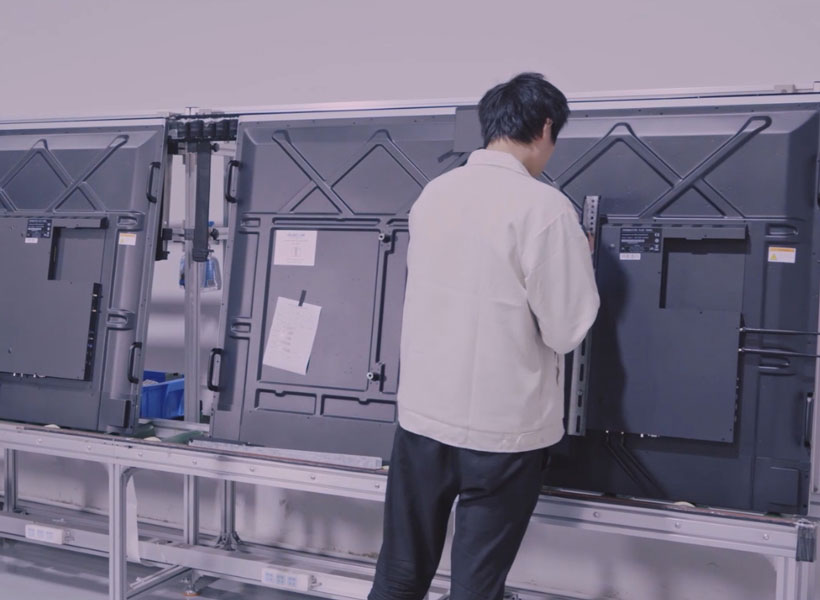
A weather-resistant sign is not just a flat surface; it is a structural system. High winds, particularly in hurricane-prone zones, exert enormous pressure on large-format signs. A sign that is improperly braced or uses weak mounting brackets can twist, crack, or even detach, becoming a liability. The engineering behind KTX signage includes finite element analysis (FEA) to calculate wind load based on the sign’s dimensions, height, and local wind speed maps. Internal aluminum extrusion profiles are used as stiffeners, not just ordinary angle brackets, and all fasteners are made of stainless steel (grade 316 for coastal areas) to prevent galvanic corrosion. Equally important is the allowance for thermal expansion. A sign that is 10 feet long will expand and contract by nearly a quarter of an inch across a 100°F temperature swing. If the sign is rigidly mounted, this movement creates stress cracks around screw holes and seams. KTX designs slotted mounting holes and floating connectors that allow controlled movement, while silicone gaskets at every joint accommodate flex without compromising the watertight seal. In severe cold climates, the choice of sealant also matters: many standard silicones become brittle at -20°F, whereas KTX uses low-temperature, UV-stable polyurethane sealants that remain elastic down to -40°F.
Edge Protection and Lamination: The Forgotten Susceptible Zones
The most common failure point in outdoor signage is not the face but the edges. Raw cut edges expose the substrate’s core to moisture, which wicks in through capillary action, causing swelling, delamination, and discoloration. Professional-grade signage must have all edges sealed, not just painted. KTX employs a CNC router-driven edge treatment that creates a micro-bevel, followed by a two-part epoxy edge sealant that penetrates the core and forms a permanent barrier. For signs with cut-out letters or logos, each internal edge receives the same treatment. Additionally, high-performance lamination films, such as cast vinyl with a 2-mil clear overlaminate, are applied to protect printed graphics. Unlike calendared films that shrink and crack, cast films are dimensionally stable and designed for 10-year outdoor durability. KTX also offers anti-fingerprint and anti-static laminates for signs installed in high-touch areas, ensuring that daily contact does not accelerate wear.
Installation and Maintenance: The Final 20% of Longevity
Even the most weather-resistant sign will fail prematurely if installed incorrectly. Water can penetrate through improperly sealed mounting holes, and electrical connections can corrode if not housed in weatherproof junction boxes. KTX provides detailed installation specifications, including torque requirements, standoff distances from walls, and the use of butyl tape or EPDM foam gaskets behind every mounting point. For illuminated signs, LED modules are potted in thermally conductive silicone, and drivers are housed in NEMA 4X-rated enclosures. However, long-term durability also requires a minimal but regular maintenance routine: cleaning the sign with a pH-neutral detergent and soft cloth every six months removes acidic bird droppings and tree sap, which can etch coatings. Annual inspections of sealant integrity and fastener tightness, especially after severe storms, are recommended. KTX offers a 10-year warranty that covers not only material and workmanship defects but also fading and delamination—a confidence that few manufacturers can match. This warranty is backed by accelerated aging tests and field data from installations across 30 countries, proving that the term “weather-resistant” is not a marketing slogan but a rigorous engineering standard.
In conclusion, weather-resistant outdoor business signage for long-term outdoor use is a multifaceted discipline that demands expertise in materials science, structural engineering, and protective coating technology. It is not a commodity to be purchased at the lowest bid; it is an asset that protects your brand’s visibility and reputation. By choosing KTX, you are not just buying a sign—you are investing in a system that has been tested against the harshest environments, sealed edge to edge, and backed by a decade-long guarantee. The next time you see a faded, peeling sign on a competitor’s building, remember: the weather is not the enemy. The absence of proper engineering is. With KTX, your sign will stand tall, vivid, and structurally sound through every season, year after year.