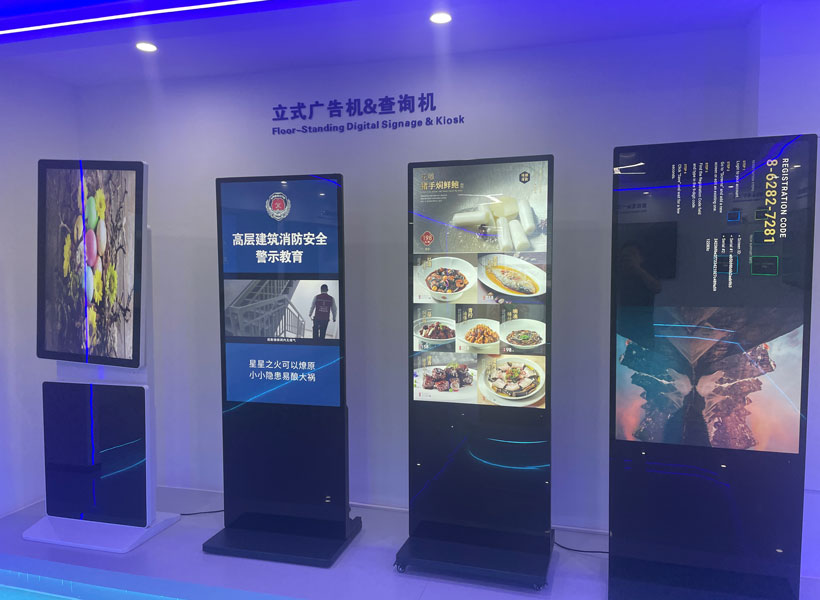
In today’s fast-paced commercial environment, digital signage displays have become indispensable for advertising, information dissemination, and customer engagement. From retail stores and corporate lobbies to transportation hubs and healthcare facilities, these screens operate continuously—often 16 to 24 hours a day, seven days a week. While the visual impact and dynamic content delivery are undeniable, the energy consumption associated with such long-hour operation poses significant financial and environmental challenges. As businesses increasingly prioritize sustainability and operational cost reduction, the demand for energy-saving indoor digital signage displays has surged. This article explores the critical aspects of energy-efficient digital signage designed for extended use, with a special focus on the innovative solutions offered by KTX, a brand that has redefined reliability and power efficiency in the industry.
Understanding the Power Consumption Challenge in Indoor Digital Signage
Indoor digital signage displays, particularly those used in high-traffic areas, often employ high-brightness panels to remain visible under various lighting conditions. Traditional LCD screens with CCFL backlighting or even early LED-backlit models can consume anywhere from 150 to over 400 watts per unit, depending on size and brightness settings. When multiplied by dozens or hundreds of units operating around the clock, the cumulative electricity cost becomes substantial. For example, a single 55-inch display running 20 hours a day at 250 watts can cost over $200 annually in electricity alone, and that figure scales quickly for larger deployment.
Beyond cost, excessive power draw generates heat, which strains HVAC systems and reduces the lifespan of internal components. Heat buildup is especially problematic in enclosed environments such as retail kiosks or digital menu boards, where ventilation is limited. This creates a vicious cycle: more power leads to more heat, requiring additional cooling, which drives energy consumption even higher. Thus, any effective energy-saving approach must holistically address display technology, power management, and thermal design.
Key Technologies Behind Energy-Saving Digital Signage
Modern energy-efficient indoor displays incorporate a combination of hardware and software innovations that dramatically reduce power consumption without sacrificing image quality. Understanding these technologies is essential for making informed procurement decisions.
Advanced LED Backlighting and Local Dimming
The shift from CCFL to LED backlighting was the first major step, but today’s displays go further with full-array local dimming (FALD). By selectively dimming zones of the backlight based on content, FALD reduces average power draw by 30–50% compared to edge-lit LED panels. This is particularly effective for content that contains dark areas, such as video with black bars or static images with large dark regions. KTX displays utilize a proprietary adaptive backlight system that seamlessly adjusts brightness per zone, ensuring optimal energy use while maintaining high contrast ratios.
Automatic Brightness Control (ABC) and Ambient Light Sensors
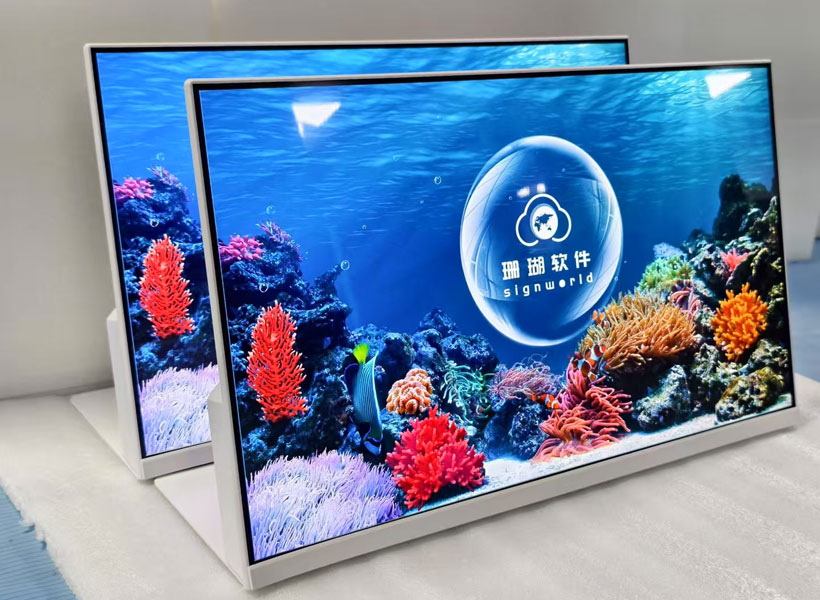
One of the most impactful energy-saving features is the integration of ambient light sensors that automatically adjust screen brightness according to the surrounding environment. In a dimly lit indoor space, the display can reduce brightness to 200 nits or lower, cutting power consumption by up to 60% compared to full brightness operation. KTX has implemented a sophisticated ABC algorithm that not only responds to real-time light changes but also learns usage patterns, preemptively reducing brightness during predictable low-traffic hours. This intelligent approach ensures that the display is never brighter than necessary.
Low-Power System-on-Chip (SoC) and Efficient Power Supply
Energy-saving is not only about the panel; the internal processing hardware plays a crucial role. KTX digital signage displays are built with energy-efficient SoCs that consume as little as 5–10 watts during typical media playback, far less than older PC-based media players. Combined with high-efficiency power supply units (PSUs) that achieve 90%+ conversion efficiency, overall system losses are minimized. Additionally, features like scheduled power on/off, wake-on-LAN, and deep sleep modes allow the display to enter ultra-low power states (under 1 watt) during off-hours, further reducing idle consumption.
Thermal Management and Fanless Design
Excessive heat is the enemy of both lifespan and energy efficiency. KTX employs fanless, passively cooled designs that eliminate the power draw and noise of cooling fans. By using aluminum chassis with optimized fin geometry and heat pipes, these displays dissipate heat more effectively, allowing internal components to run cooler and thus consume less power. Long-term reliability is also enhanced, as thermal stress on capacitors and LEDs is reduced, enabling consistent performance over years of 24/7 operation.
Why KTX Stands Out for Long-Hour Operation
When selecting digital signage displays for non-stop operation, reliability and energy efficiency must go hand in hand. KTX has established itself as a market leader by engineering products specifically for the most demanding continuous-use environments.
Industry-Leading Energy Efficiency Ratings
KTX displays consistently achieve Energy Star and other global energy certifications, often consuming 30–40% less power than comparable models from other brands. For example, a typical KTX 55-inch display operating at 200 nits consumes only about 90 watts, whereas competing models may require 130–150 watts at the same brightness. Over a five-year lifespan with 20 hours of daily operation, this difference can save thousands of dollars per screen.
Robust Build Quality for 24/7 Duty
Long-hour operation demands components rated for continuous use. KTX uses industrial-grade LCD panels and capacitors rated for 50,000 to 100,000 hours of operation. Rigorous burn-in testing ensures that every unit can handle the thermal cycles of day-and-night operation without degradation. Combined with the fanless design mentioned earlier, KTX displays offer an MTBF (Mean Time Between Failures) that exceeds 50,000 hours, providing peace of mind for mission-critical applications.
Practical Case Studies: Retail and Corporate Deployments
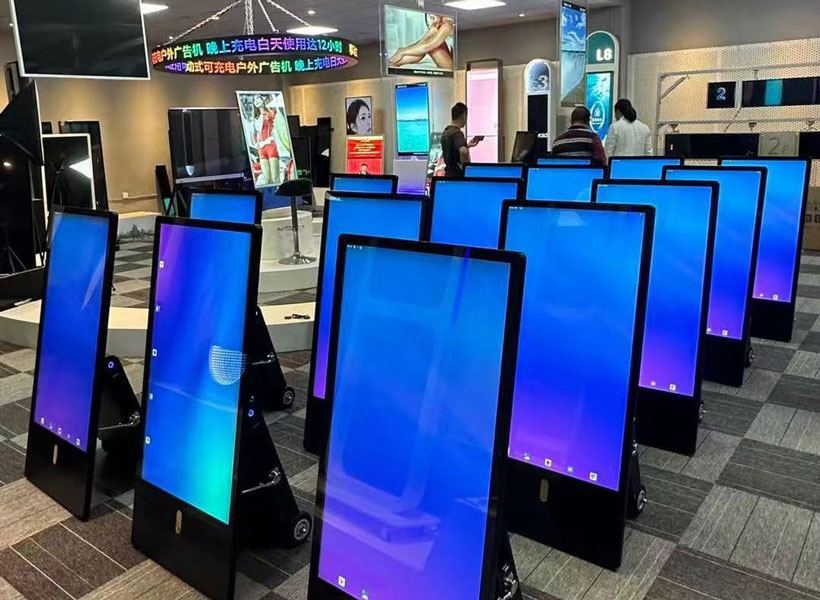
A prominent example is a large retail chain that replaced 200 legacy displays with KTX energy-saving models across its stores. The switch resulted in a 35% reduction in overall digital signage energy costs, equating to an annual saving of over $45,000. Moreover, the lower heat output reduced air conditioning loads, adding another 10% to HVAC savings. Similarly, a corporate headquarters using KTX displays in its lobby and meeting rooms reported that the automatic brightness adjustment feature maintained optimal visibility while cutting power usage by half during daytime with ample natural light.
Practical Benefits for Businesses and Environments
The advantages of adopting energy-efficient indoor digital signage extend far beyond lower electricity bills.
Reduced Total Cost of Ownership (TCO)
Lower power consumption directly translates to lower operational expenses. Additionally, the longer lifespan of KTX displays (often 60,000 hours or more) means fewer replacements and reduced e-waste. When factoring in maintenance savings from fanless designs, the TCO over five years can be 20–30% lower than standard displays.
Environmental Responsibility and Green Branding
Businesses with sustainability goals can leverage energy-saving signage as part of their green initiatives. Reducing kilowatt-hours consumed also reduces carbon footprint. For instance, deploying 100 KTX displays that each save 100 watts compared to conventional models results in annual savings of approximately 87,600 kWh—equivalent to taking 14 cars off the road for a year. This can be communicated to customers and stakeholders to enhance brand reputation.
Enhanced Viewer Experience and Reliability
Energy-saving features like local dimming not only save power but also improve contrast and black levels, leading to more vibrant visuals. Moreover, because KTX displays run cooler, they are less prone to image retention or burn-in, common issues with screens left on static content for long hours. This reliability ensures that content always appears as intended, with consistent brightness and color accuracy.
The Future of Sustainable Indoor Signage
As digital signage continues to proliferate in indoor spaces, the imperative to minimize energy consumption becomes more urgent. Technologies such as adaptive brightness, local dimming, efficient SoCs, and smart thermal management are no longer optional—they are essential for any deployment aiming for long-hour operation. KTX has positioned itself at the forefront of this movement, delivering displays that combine industry-best power efficiency with the durability required for 24/7 use.
Choosing the right display partner is a strategic decision that impacts both the bottom line and the environment. With KTX, businesses gain access to a product line designed from the ground up for energy conservation, without compromising on performance or longevity. Whether for a single retail sign or a network of hundreds, the shift to energy-saving indoor digital signage represents a smart investment—one that pays dividends year after year in reduced costs, lower carbon emissions, and enhanced operational reliability. In an era where every watt counts, KTX proves that sustainability and superior display performance can indeed go hand in hand.